Your leg strength predicts your brain health 10 years from now
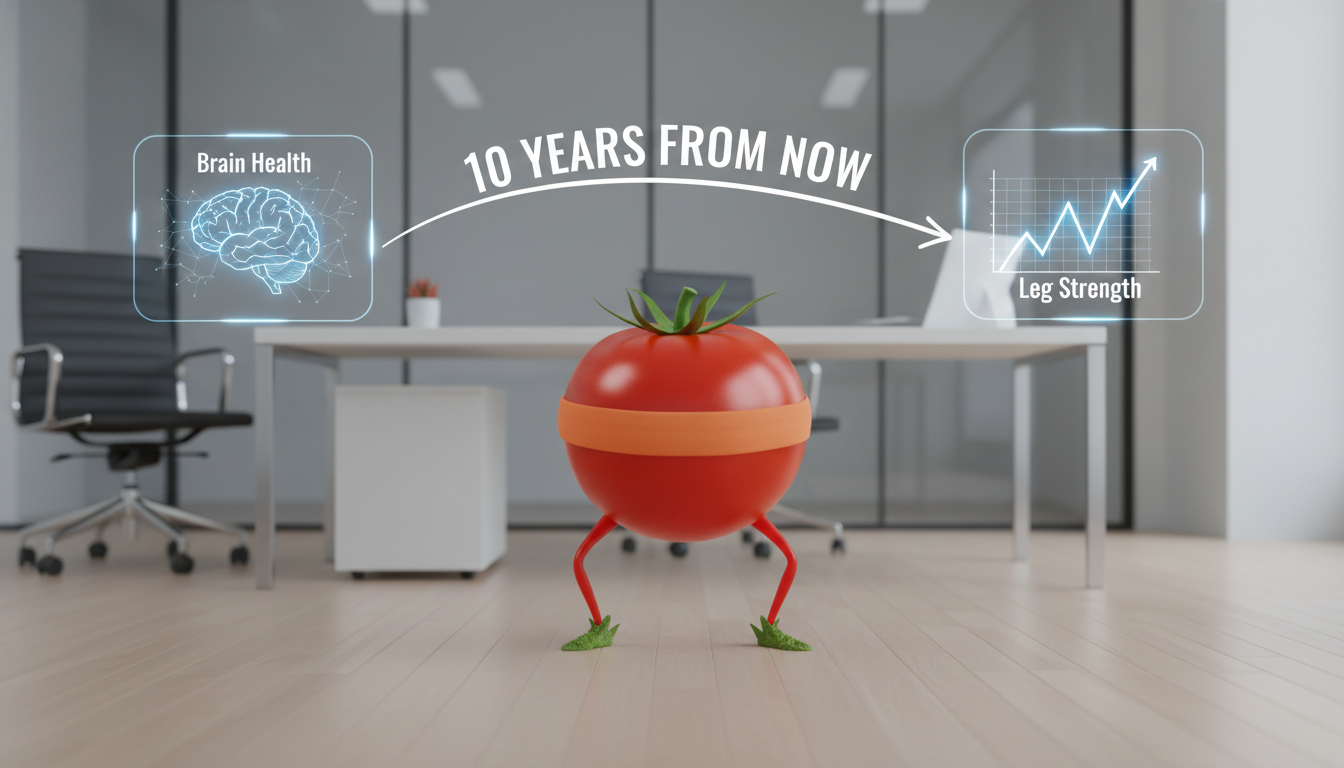
Most developers think of leg training as something for athletes or people who care about aesthetics. A 10-year study suggests it's actually one of the best investments you can make in your future cognitive function.
The 10-year twin study
Researchers at UCL tracked twins over a decade to isolate which factors best predicted cognitive aging. They tested everything: diet, sleep, cardiovascular fitness, lifestyle habits. The variable that came out on top was leg power.
Twins with higher leg power at the start of the study had significantly better cognitive function ten years later - better memory, faster processing, stronger learning capacity. The team calculated that 40 more watts of leg power is associated with a brain that functions about 3 years younger.
Using twins matters here. It controls for genetics. The difference in brain aging they found was driven by the leg strength gap, not by inherited traits.
Why legs specifically
Skeletal muscle isn't passive tissue. When you contract it, it releases proteins called myokines into your bloodstream. One of the most studied, BDNF (brain-derived neurotrophic factor), directly stimulates the growth of new neurons and synaptic connections.
Leg muscles are the largest in your body. That means more myokine release per movement than smaller muscles. A set of squats produces a bigger neurochemical response than the equivalent effort from your arms or chest.
A 2025 meta-analysis of 17 randomized controlled trials confirmed the pattern: resistance training significantly improved overall cognitive function, working memory, verbal learning, and spatial memory. These aren't abstract correlations. They're the cognitive abilities you use to hold context on a complex codebase, debug a subtle problem, or learn a new system.

The desk worker problem
Most developers don't train their legs. Eight to ten hours a day, our legs do almost nothing except support some bodyweight while we sit. The myokine signal your brain relies on never arrives.
The cognitive changes that show up in studies over a decade don't happen all at once. They accumulate quietly. By the time you notice a difference, you've been running a deficit for years.
What you can actually do
You don't need a gym or a program. Bodyweight squats and lunges activate the same muscle groups and produce the same myokine response as weighted versions. The volume threshold for effect is lower than most people assume.
Fifteen to twenty squats during a break takes about 90 seconds. Done a few times a day, that's enough mechanical stimulus to start bridging the gap. After a few weeks it stops feeling like exercise and starts feeling like just standing up.
Movedoro fires a break timer every Pomodoro. The easiest leg-focused option is right there when it goes off: stand up, do 20 squats, sit back down. The research follows you for a decade. The habit starts today.