Using 4+ AI tools is frying your brain (BCG study)

Boston Consulting Group just put a name to something a lot of developers have been feeling: AI brain fry.
Their research found that workers using four or more AI tools simultaneously experience a specific kind of cognitive collapse. Not normal burnout. Not ordinary fatigue. Something distinct - the mental overload that comes from constantly switching between AI assistants, copilots, and agents while trying to do actual work.
34% of those workers actively plan to leave their companies.
What's actually happening
Every AI tool you add creates a new input channel. Each one has different capabilities, different interfaces, different ways of being wrong. You're not just using tools - you're managing a small team of unreliable assistants, each requiring context, verification, and correction.
The context switching cost is real. Research from the University of California found it takes 23 minutes to fully recover focus after an interruption. AI tools create dozens of micro-interruptions per hour - prompting, reviewing, correcting, re-prompting. The interruptions don't feel like interruptions because you're still "working." But the cognitive load accumulates the same way.
The adoption trap
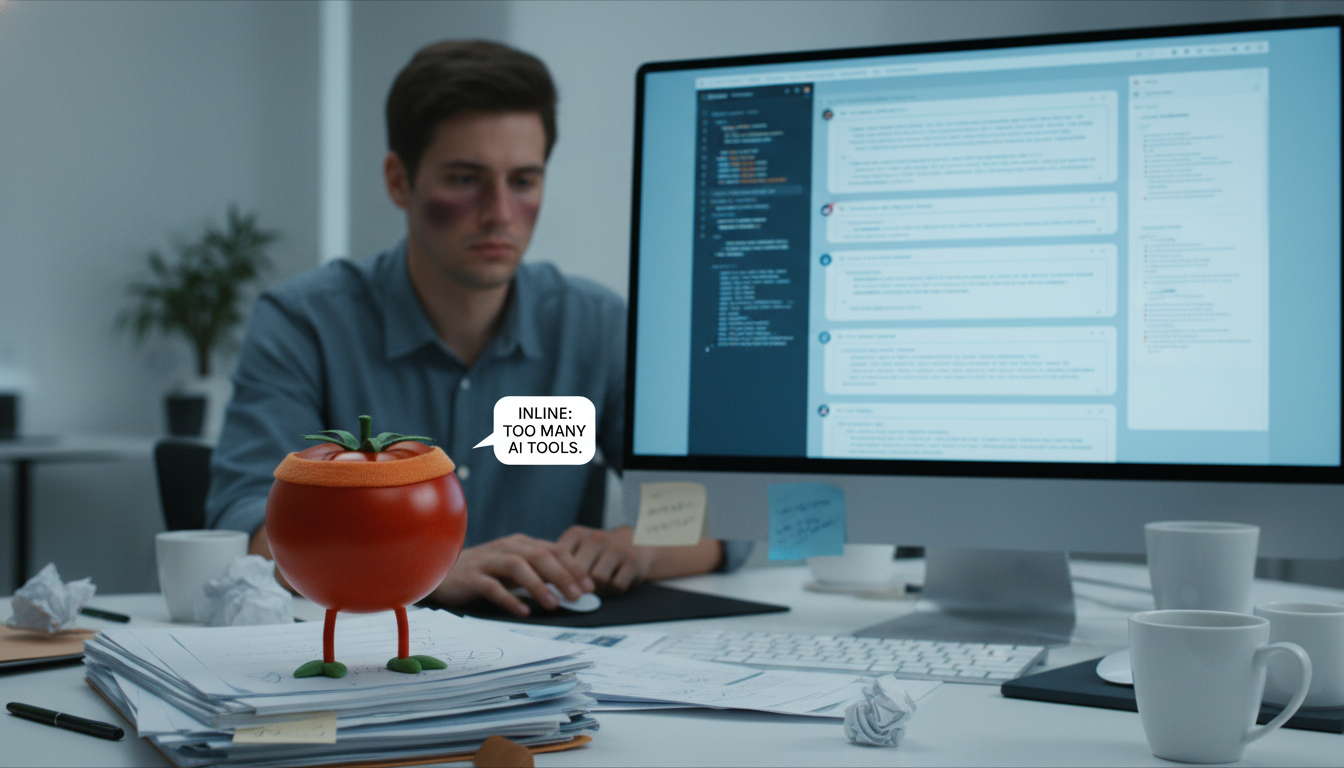
There's pressure to keep adding tools. Your company buys a new AI subscription. A colleague swears by a different copilot. The newsletter recommends five more productivity apps.
More tools should mean more productivity. That's the pitch. The BCG data says the opposite happens past a certain threshold - not because the tools are bad, but because your brain has a finite capacity for managing complexity.
Four tools is apparently where the math starts breaking down.
What the research suggests
The solution isn't to go back to no AI tools. It's to treat your cognitive bandwidth as a constraint, not an infinitely expandable resource.
That means choosing fewer tools and using them more deliberately. It means protecting deep work sessions from the constant pull of AI-assisted micro-tasks. And it means taking real breaks - not the "30 seconds while the AI thinks" kind, but full stops where you step away from all of it.
The same movement break research that applies to general knowledge work applies here. Brief physical activity interrupts the cognitive spiral, drops cortisol, and gives your prefrontal cortex a chance to reset. The BCG burnout data is new. The mechanism is not.
I built Movedoro because I noticed that I needed actual breaks - ones I couldn't shortcut. When the Pomodoro fires, the screen locks until you move. No checking a different AI tool during the break. No responding to one more prompt. A real stop.
If you're running four AI tools, that might matter more than you think.