Gamification beats standing desks (what 36 meta-analyses found)
The Lancet Public Health just published an umbrella review of 36 meta-analyses, covering 214 studies and 264 workplace interventions designed to get people moving more.
The results are not what the standing desk industry wants you to read.
What the data actually says
Sit-to-stand workstations were the single most effective intervention for reducing sedentary time. Used alone, they cut sitting by up to 75 minutes per day. Combine them with behavioral coaching and that number goes up by another 33%.
That sounds good. But here's the catch.
Across all 264 interventions studied, not one consistently improved moderate-to-vigorous physical activity. Sit-stand desks reduce sitting. They do not add real movement. You stand instead of sit, but your heart rate doesn't change, your muscles don't engage, and the metabolic benefit you're looking for doesn't happen.
The Lancet's conclusion was blunt: current workplace interventions have modest effects on physical activity. The equipment reduces one problem while leaving the more important one untouched.

What actually moves people
The interventions that produced real step count improvements were not hardware-based. Gamification combined with social strategies - things like streaks, challenges, visible progress, and peer accountability - generated an average of 1,056 extra steps per day. That's the equivalent of a short walk, added consistently, without buying anything.
Self-monitoring alone wasn't enough. The social or gamified component was the key multiplier. When movement was tracked, scored, or shared, people actually did more of it.
This matches what we know about behavior change. Equipment changes the environment. Gamification changes the motivation. Those are different problems, and only one of them is about buying something.
The practical version
A $1,500 standing desk will probably get you standing for part of your day. That's not nothing. But it won't get your heart rate up. It won't generate the neurological response that comes from actual movement. And after a few weeks, research shows most people default back to sitting anyway.
A system that reminds you to move, tracks whether you did it, and builds a streak you don't want to break? That costs nothing and has 36 meta-analyses worth of support behind it.
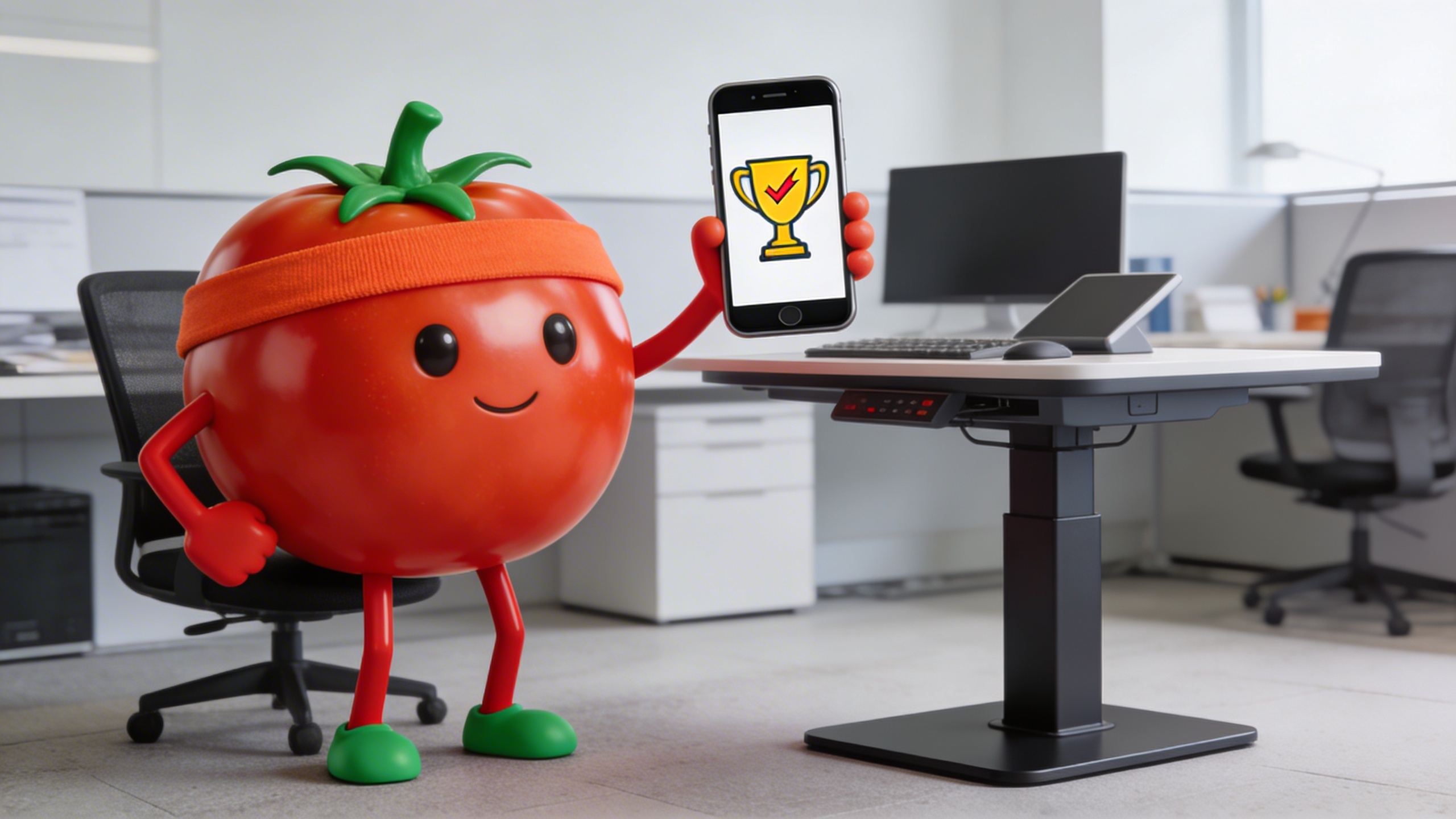
I built Movedoro around this logic. The app doesn't change your desk. It changes your behavior - a break timer that won't let you skip the movement, exercises that get your heart rate up in under two minutes, and a consistency record that's easy to maintain and hard to abandon once you've started.
You probably don't need new equipment. You need a better system.