
Your desk is shrinking your muscles (and that affects your brain)
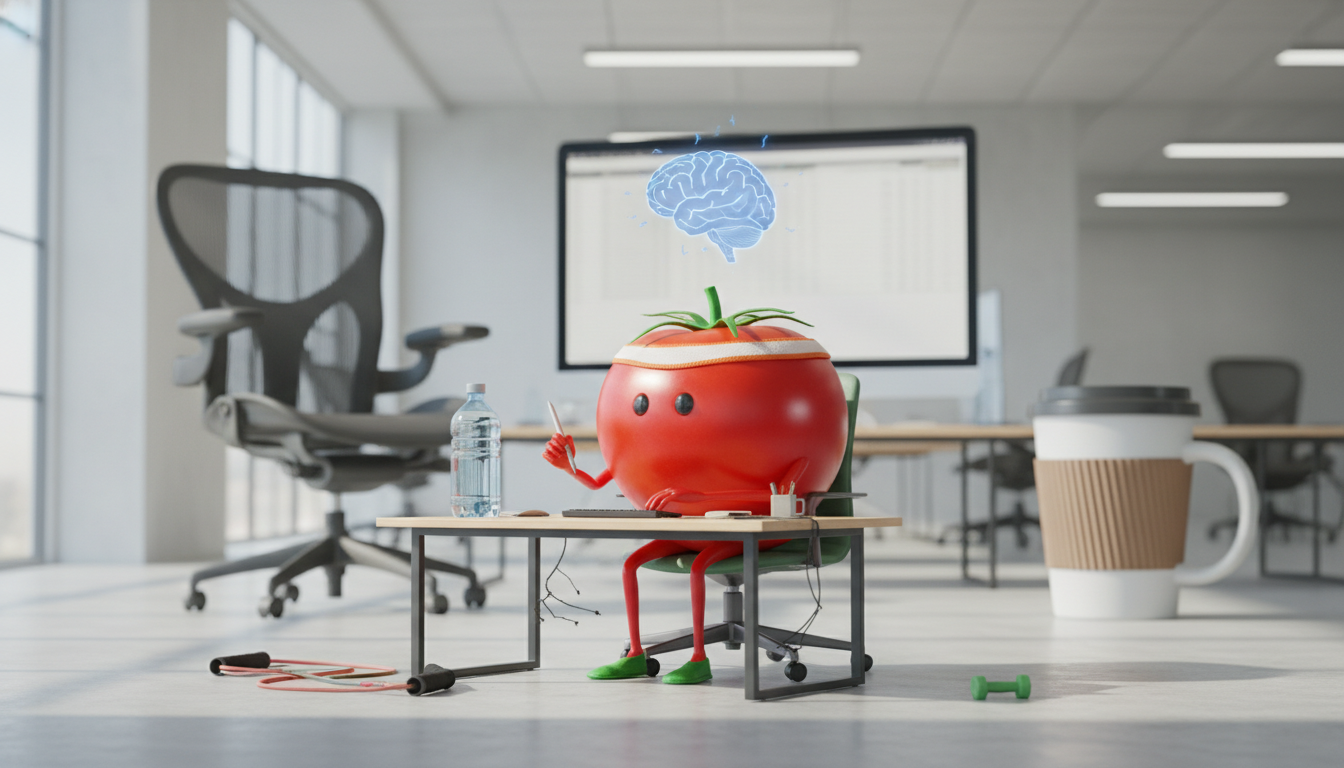
Most people know sitting is bad for their heart. Fewer know what it does to their muscles.
And almost nobody knows what that muscle loss does to their brain.
Your muscles are shrinking
A longitudinal study from the German Study on Mental Health at Work found that sarcopenia risk - the medical term for age-related muscle loss - increases 33% for each additional hour of sitting per day.
You're probably thinking: I'm in my 30s, that's an old-person problem.
It's not. Muscle atrophy from inactivity can start within 24 to 48 hours of reduced movement. Eight hours of sitting every day accelerates that process regardless of your age.
Going to the gym three times a week slows it down. It doesn't stop what's happening during the other 8 hours you're at your desk.
The brain connection nobody talks about
Here's the part I found genuinely surprising.
Muscles aren't just for moving. They're endocrine organs. When they contract, they release signaling proteins called myokines into your bloodstream.
These myokines cross the blood-brain barrier. One of them - BDNF, or brain-derived neurotrophic factor - promotes neuron growth, strengthens memory consolidation, and is directly associated with better learning and sustained attention.

When your muscles are inactive for hours, myokine production drops. BDNF levels fall. Your brain gets less of the signal it needs to consolidate information and maintain focus.
This is a different mechanism from blood sugar spikes, eye strain, or decision fatigue. It's your muscles starving your brain of a chemical it depends on.
What this means for your workday
The problem isn't that you skipped the gym. It's that your muscles sat dormant all morning.
A 20-minute run at 6pm releases myokines - but those effects are relatively short-lived. The research suggests what matters more is consistent, distributed muscle contractions throughout the day. Not big ones. Squats, a short walk, even standing up and moving your arms.
Any contraction counts. The muscle just needs to contract.
The pattern that works: frequent, brief movement breaks starting from the first hour of the day. Not a single burst at the end.
That's the whole logic behind Movedoro. When the timer fires and the screen locks, you move. It's not motivational - it's mechanical. Your muscles contract on schedule, your BDNF stays elevated, and your brain has what it needs to do the work you're actually there to do.
Your gym session still matters. But so does what happens between 9am and 5pm.