
Your calendar is the #1 productivity killer (MIT)
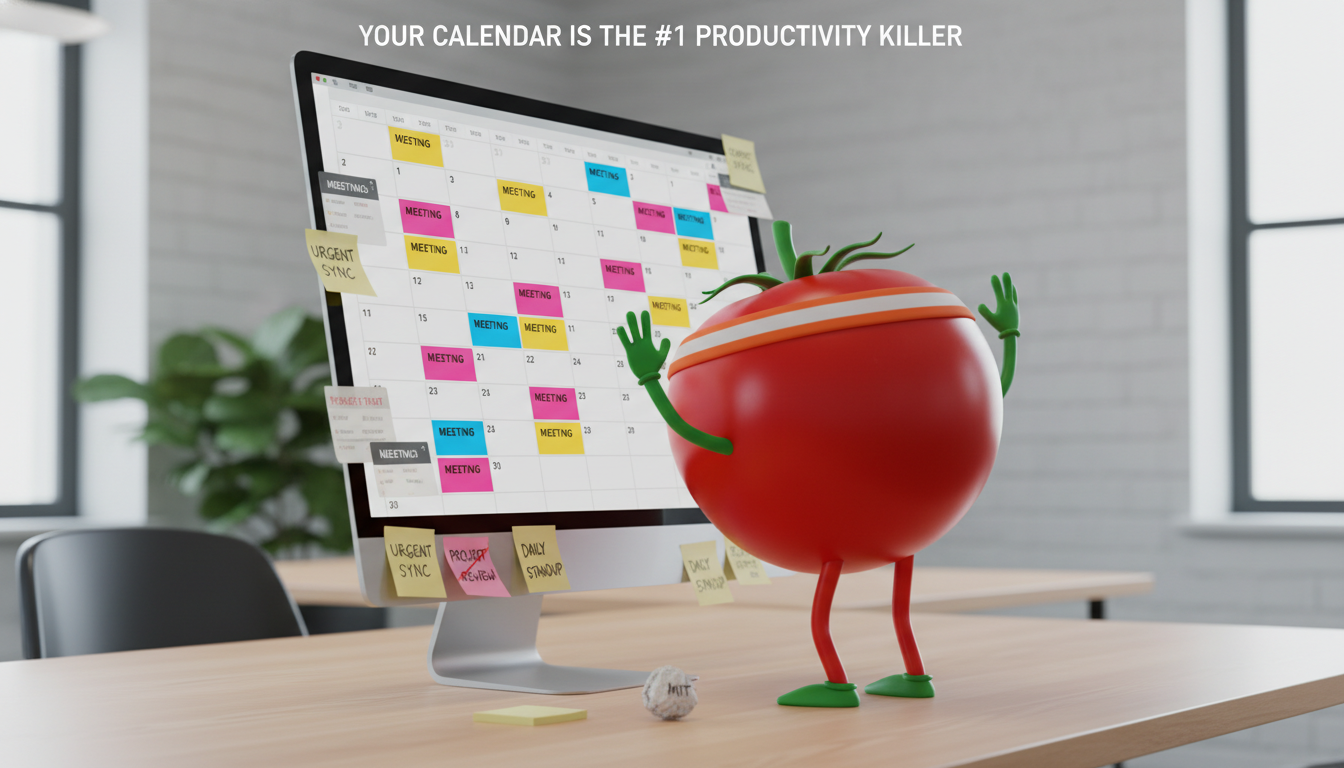
Employees average 2.9 deep work sessions per week. They say they need 4.2 to feel productive.
That's a 31.3% deep work deficit. And it's not coming from distraction or laziness.
It's coming from your calendar.
The math is brutal
The average worker spends 18 hours per week in meetings. 71% of managers say those meetings are unproductive. 70% of the time, meetings cause delays in other essential work.
So you block out time for focused coding. Then a 30-minute sync lands in the middle of it. Then another. Your "focused block" becomes three 20-minute fragments, and after each interruption it takes 23 minutes on average to fully refocus.
By noon, you've lost the day.
And the work you actually got hired to do - the architecture decisions, the hard debugging, the design work - gets squeezed into whatever's left.
What MIT found
MIT Sloan Management Review studied 70 companies that experimented with no-meeting days.
One meeting-free day per week: +35% productivity increase. Two meeting-free days per week: +71%.
That's not a marginal gain from trying harder. That's what happens when people get uninterrupted time to actually think.

Someone tested it at scale
In 2023, Shopify canceled every recurring meeting with more than three people and introduced no-meeting Wednesdays.
The result: 10,000 calendar events removed. Around 76,000 hours freed up in a single year. More completed projects across the company.
They didn't hire more engineers or change their tech stack. They just stopped fragmenting the workday.
What you can do with this
Most of us can't overhaul our meeting culture overnight. But you can do two things.
First, protect at least one morning per week as a no-interruptions block. No syncs, no standups, no "quick calls." Even a single protected day makes a measurable difference according to the data.
Second, treat the focused time you do have as non-negotiable. Not "I'll try to focus between meetings" but an actual committed session with a timer and a hard start.
That's the reason I use Movedoro - not just for the breaks, but because the timer signals that a real work session has started. When it's running, I'm not in meeting mode. I'm not available mode. I'm actually working.
The problem isn't your focus. It's that your schedule was never designed to protect it.