
WFH Workers Sit 31 Minutes More (And Walk 2,564 Fewer Steps)
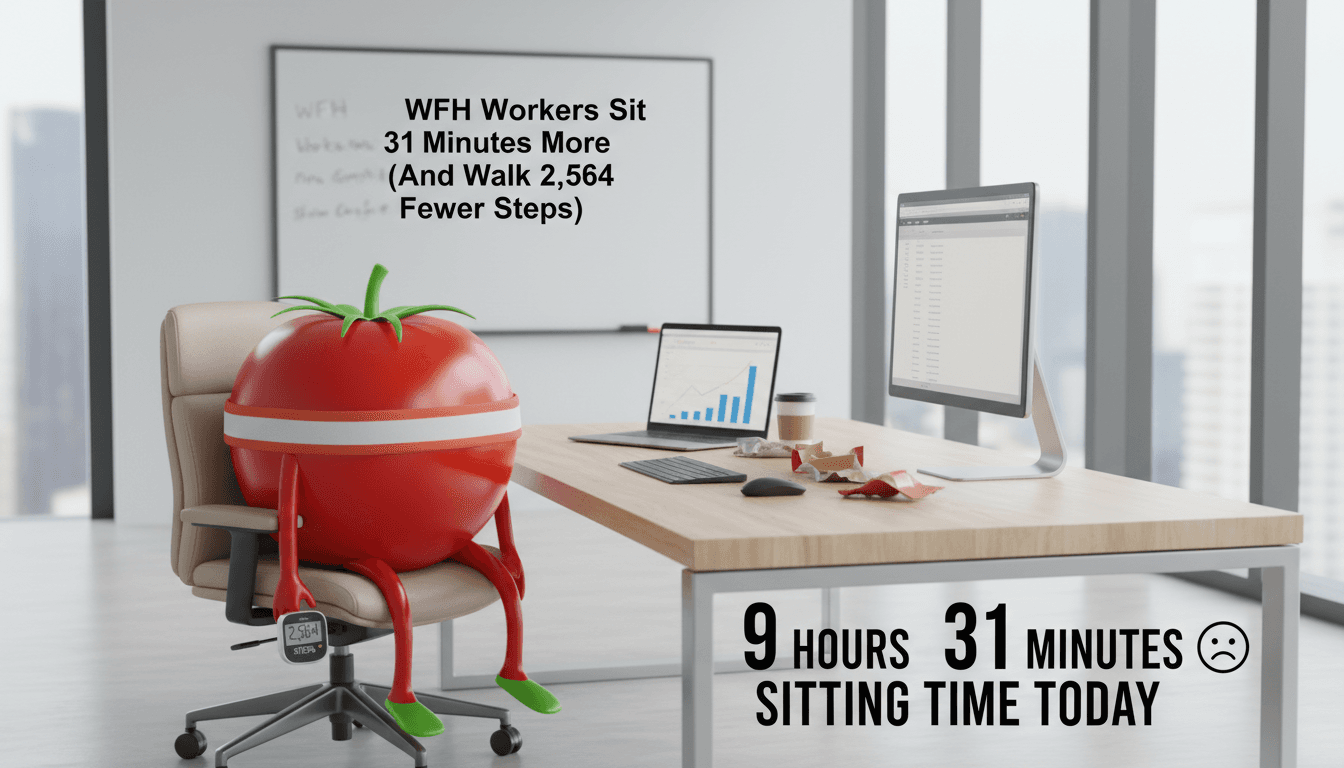
Working from home makes you sit 31 minutes more per day.
And you walk 2,564 fewer steps.
That's from a 2026 meta-analysis that looked at 282,264 workers. The largest study on remote work and sedentary behavior ever done.
The numbers are specific because they're real.
What The Research Shows
Researchers compared sedentary behavior and physical activity between working from home and working onsite.
The results are clear. When you work from home, you sit more and move less.
31 extra minutes of sitting doesn't sound like much. But that's every single day. Over a year, that's 130 hours of additional sitting.
And 2,564 fewer steps per day adds up fast. That's about 1.3 miles you're not walking. Every day.
The study included 38 different research papers from around the world. This isn't one small survey. It's a systematic review of every major study done on this topic.
Why Remote Work Kills Movement
When you worked in an office, you moved without thinking about it.
You walked to meetings. You grabbed coffee. You went to lunch. You walked to the bathroom on a different floor.
At home, everything is within arm's reach. Your coffee is in the kitchen. Your bathroom is 10 steps away. Your meetings are on Zoom.
The office had forced movement built into the structure. Remote work stripped all of that away.
And it's not just about steps. The study found that overall physical activity decreases when working from home. You're not just walking less. You're moving less in general.
The Autonomy Problem
A 2025 study on reducing sedentary behavior in home office workers found something interesting.
Employees want autonomy to choose when and how they reduce sitting. They don't want to be micromanaged about movement.
But that same study found employees feel they can't leave their desk while working from home. They don't feel trusted. So they stay glued to their chair.
You have the freedom to move whenever you want. But you don't actually use it because you're worried about looking unproductive.
What Actually Works
You're not going to suddenly start walking 2,564 more steps per day because you read this article.
You know you should move more. That's not new information.
What works is removing the decision entirely. You don't choose when to move. The break happens automatically.
I built Movedoro around this idea. Every 25 minutes, your screen locks. You move for 2 minutes. Then you get back to work.
It's not about motivation. It's about creating forced movement breaks when your brain is too deep in work to remember.
The research is clear. Working from home increases sitting and decreases movement. You can know that and still not change. Or you can use a system that doesn't rely on willpower.
That's it.


