
The 4-day work week only works if you fix this first

The biggest controlled trial of the 4-day work week just wrapped. 2,896 employees, 141 companies, 6 countries, 6 months. Published in Nature Human Behaviour in 2025.
The headline: 90% of companies kept the 4-day week after the trial ended.
But there's a part most people skip over.
What actually made it work
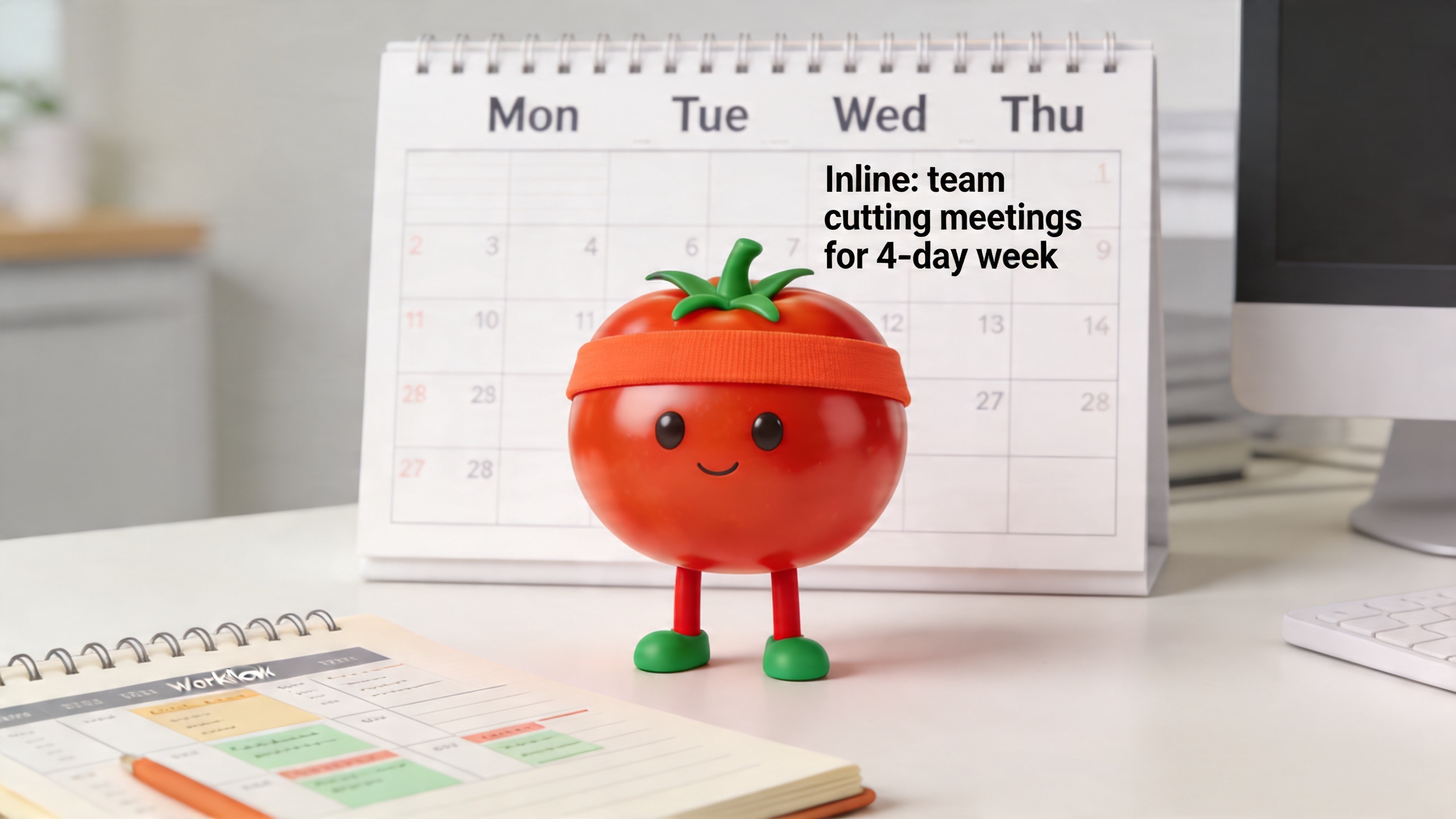
Before the shift, each company spent about 8 weeks restructuring their workflow. They cut unnecessary meetings, redesigned how collaboration happened, and eliminated the low-value filler that normally eats half your week.
The companies that just dropped a day without restructuring? More fatigue. Worse outcomes than before. They crammed the same obligations into fewer hours and paid for it.
The ones that succeeded didn't work less. They worked differently.
The hidden variable
What separates those two groups isn't discipline or culture. It's whether they treated focus time as something to protect, not something to squeeze more into.
The companies that kept the 4-day week built in clear blocks for deep work. They stopped treating attention as infinitely renewable. They gave people actual recovery time between sprints.
That sounds obvious. But look at how most developers actually work: context switching every few minutes, calendar fragmented by meetings, no consistent break rhythm. You're technically working 8 hours but cognitively running at maybe 60% capacity across all of it.
The same principle at the micro level
The 4-day week works at the weekly scale when you restructure. The same logic applies at the daily scale.
Dense, sustainable work requires real recovery built in - not just end-of-day collapse. Short movement breaks between focus blocks do exactly this. They reset your nervous system, clear accumulated mental fatigue, and let you actually come back to the next task instead of just continuing through exhaustion.
It's not about working fewer hours. It's about structuring the hours you have so they actually produce something.
I built Movedoro around this. The break is already built into the Pomodoro cycle - I just made sure the break is active recovery, not screen time in a different tab.
That's pretty much it.