Pomodoro gives you the same output (but at a higher cost)
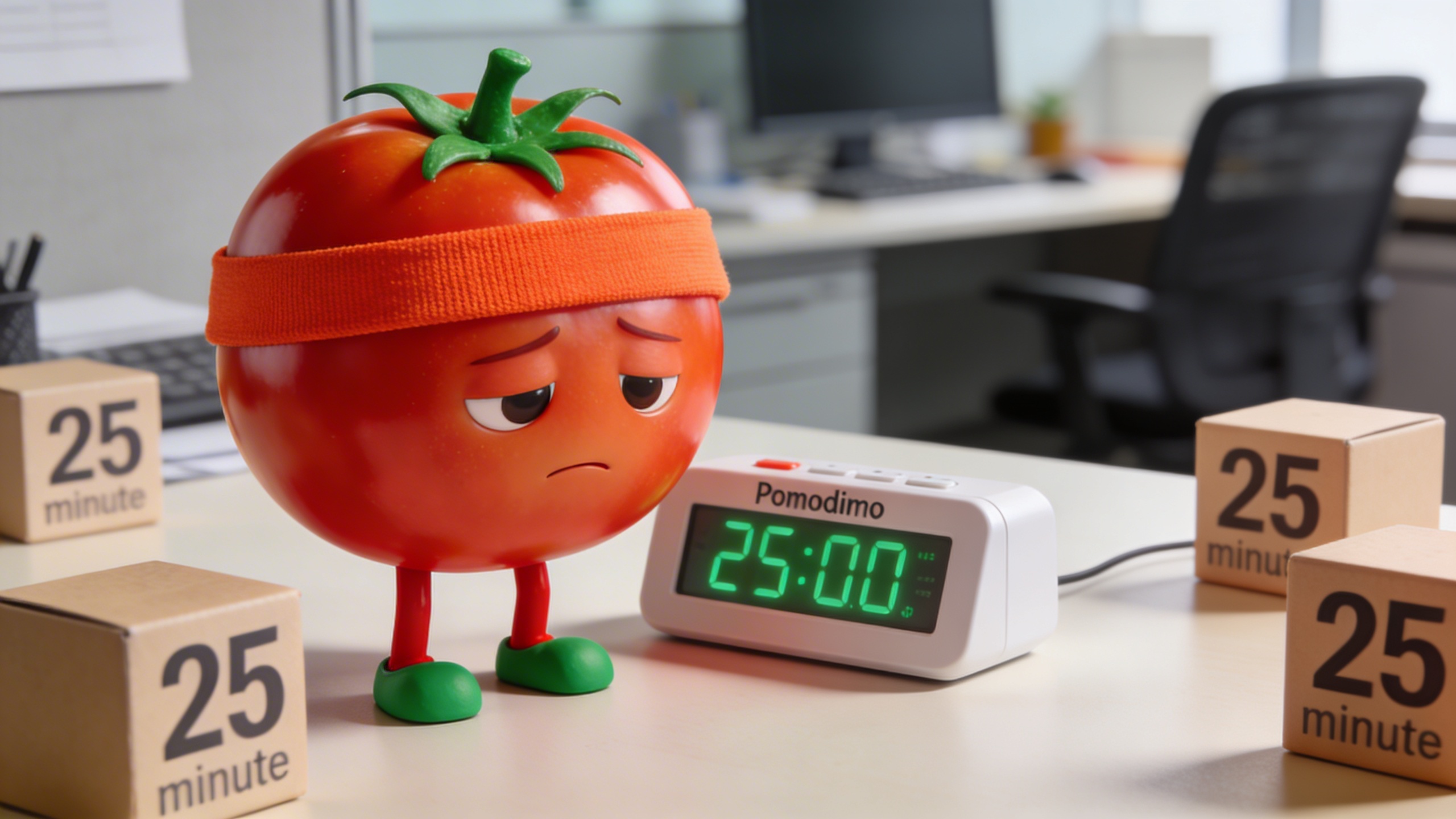
Researchers compared Pomodoro, Flowtime, and self-regulated breaks in a controlled 2-hour study with 94 students. Productivity was the same across all three groups. Task completion was the same.
But Pomodoro users got tired faster.
What the study actually measured
This was a real controlled trial published in MDPI Behavioral Sciences in 2025. Students were split into three groups: Pomodoro (25 minutes work, 5 minute break on a timer), Flowtime (work until you feel like stopping, then take a proportional break), and self-regulated (decide everything yourself).
At the end of two hours, all three groups completed roughly the same amount of work.
That part is useful to know on its own. There's no secret productivity multiplier hidden inside any particular break method. Output is output.
The difference showed up in how people felt. The Pomodoro group reported a faster increase in fatigue over the session compared to the self-regulated group. Motivation declined faster too, for both Pomodoro and Flowtime, compared to people who just decided for themselves when to stop and start.

The cost that adds up
Two hours of faster fatigue might not change much in one session. But developers don't work two-hour study blocks. They chain them together across a full day, across a week.
The rigid 25-minute timer works against you when you're in the middle of a complex problem. You feel the pressure of the clock ticking down. You rush to get to a stopping point. Or you ignore the timer, feel like you broke the system, and lose the psychological benefit of having a system at all.
Self-regulated breaks don't have this friction. You stop when you notice you're fading, not when a preset interval ends.
What this doesn't mean
It doesn't mean Pomodoro is wrong. For shallow work, repetitive tasks, or situations where you struggle to start, the structure is genuinely useful. The study confirms Pomodoro delivers results - just at a slightly higher energy cost.
And the research on breaks in general is clear: structured rest beats no rest by a wide margin. The question is just about which kind of structure fits the work.
For deep focus work, the data points toward breaks you control rather than breaks a timer dictates.
I built Movedoro to force movement during breaks without forcing when the break has to happen. You can run it alongside Pomodoro if you want the structure, or let it remind you to move whenever you naturally surface from concentration. The movement is non-negotiable. The timing is yours.
Same output either way. Might as well be less tired at the end.