Your brain works better when someone's watching
You're working from home. You sit down to code. Thirty minutes later you've responded to six Slack messages, checked email twice, and opened Twitter.
You haven't written a single line.
The office did one thing right
The office is annoying in a lot of ways. Open floor plans, pointless meetings, commutes. But it does one thing well: it's full of people who are also trying to work. That ambient presence is real, and it works on you whether you realize it or not.
Psychologists first documented this in 1965. Robert Zajonc showed that people perform better on familiar tasks when others are present - a phenomenon called social facilitation. The effect shows up across species. Even cockroaches run mazes faster when other cockroaches are watching. It's basic animal psychology, not discipline.
Remote work removes this entirely. You're alone. Nobody's watching. You're also only productive for about 2-3 hours per day on average, according to multiple remote work studies from 2025 and 2026. The rest gets swallowed by drift.
What body doubling actually is
The ADHD community figured out a workaround decades ago. It's called body doubling: working alongside another person, not with them. They do their task. You do yours. Nobody talks. You're just present in the same space.
The mechanism is the same as an open-plan office - minus most of the downsides. Another person being there creates a soft social contract. "We're both working right now." That's enough to keep you from reaching for your phone.
It sounds too simple. It isn't.

You don't need to be in the same room
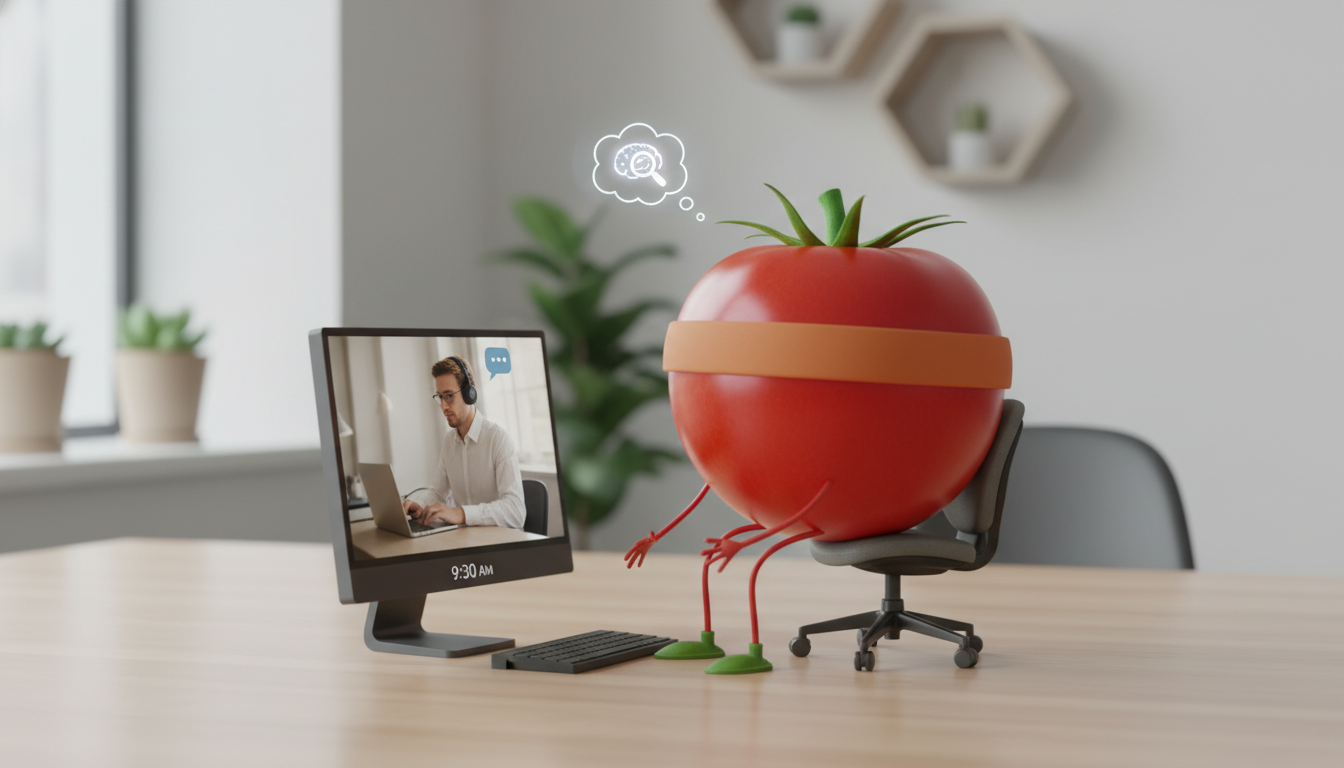
Apps like Focusmate make this fully virtual. You book a session with a stranger, turn on your camera, say what you're working on, then do the work in silence. At the end you check in briefly. No conversation during - just shared presence.
It feels strange the first time. Then it works surprisingly well.
One thing most people don't think about: breaks matter in body doubling sessions too. If you're 25 minutes in and your partner suddenly goes quiet and walks off, the contract breaks. Having a structured break time - where both people step away at the same time and come back together - actually reinforces the session rhythm instead of disrupting it.
I run Movedoro during body doubling sessions for exactly this. The timer runs the focused work block, both people step away when the break hits, and we return together. The break stops feeling like a gap and starts feeling like part of the structure.
If solo work keeps sliding into distraction, try adding a witness. You don't need a co-working space or even someone you know. Just someone also trying to get something done.
That's pretty much it.