Your Brain Works 13% Faster After 5 Minutes Of Movement
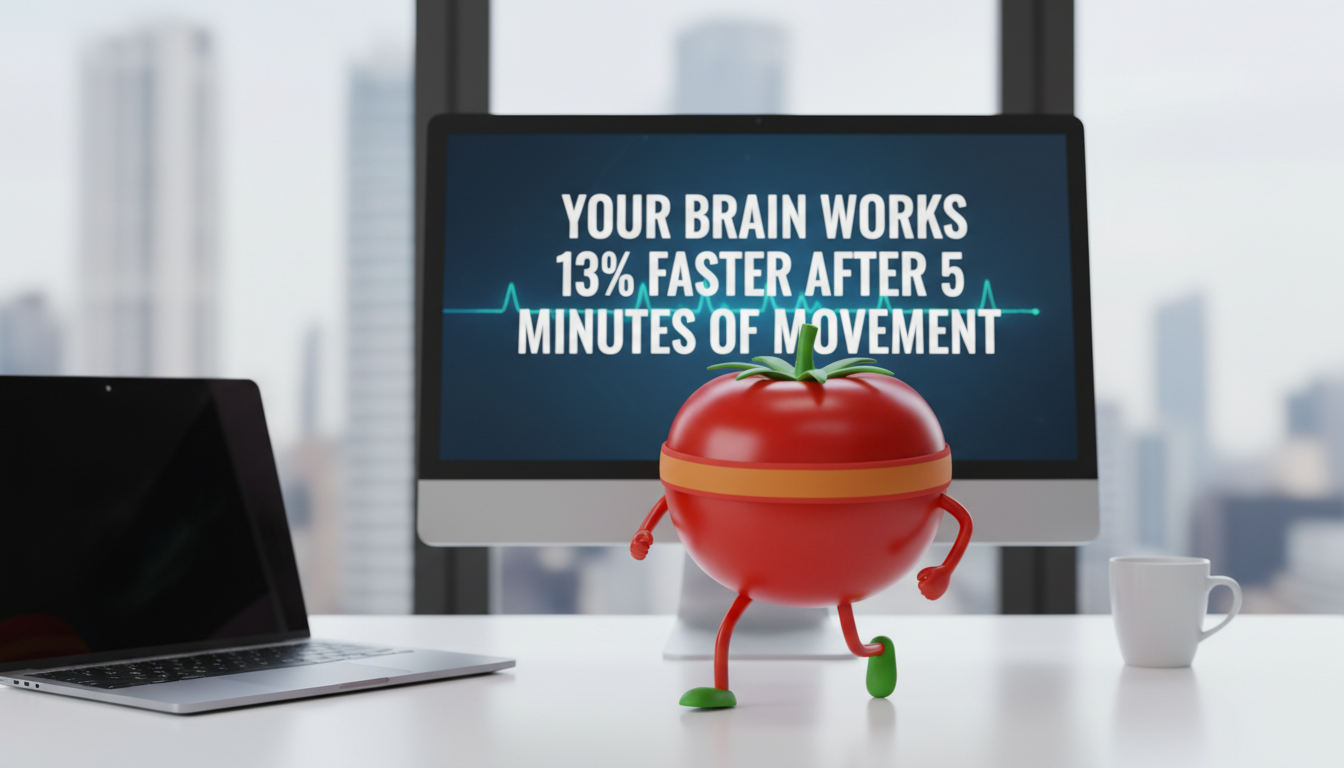
You take movement breaks because experts say they're good for you.
Here's what they don't tell you. Those five minutes of squats you do before tackling a hard problem? Your brain literally works faster afterward.
The Processing Speed Boost
A 2024 meta-analysis published in Nature examined how acute exercise affects cognition. The result? A 13% improvement in cognitive performance.
That's not about long-term brain health. That's your brain processing information faster right now.
The researchers found that being more active 20 to 60 minutes before a cognitive task improves processing speed. On days when participants were more active than their average, they rated their memory better in the evening.
Not weeks later. The same day.

Why This Actually Matters
If you think about it, this changes how you should approach difficult work.
You're about to debug a complex issue. Or design a system architecture. Or review someone's pull request.
Five minutes of movement before you start makes your brain measurably faster at processing that information.
The study showed cycling and high-intensity interval training work particularly well. But even simple movements count. Stand up. Do jumping jacks. Walk around the block.
The Reaction Time Edge
Here's what caught my attention. The research found that exercise decreases reaction time.
You're switching between files, reading error messages, making decisions. Every context switch requires your brain to react and refocus.
Faster reaction time means less cognitive load when switching contexts. You stay sharp longer.
Why You Still Won't Do It
The problem isn't knowing movement helps. The problem is remembering to move when you're deep in a problem.
You tell yourself you'll take a break after you solve this one thing. Three hours later your back hurts and you're still stuck.
The research shows you need the movement before the hard task, not after you're already exhausted.
The System
I built Movedoro because I needed something to force the break before my brain got slow.
Every 25 minutes, your screen locks. Two minutes of movement. Then back to work with a brain that processes 13% faster.
You don't have to remember. You don't have to convince yourself. The system does it for you.
That's it.