
You Feel 30% Faster with AI (But Tests Show You're 19% Slower)
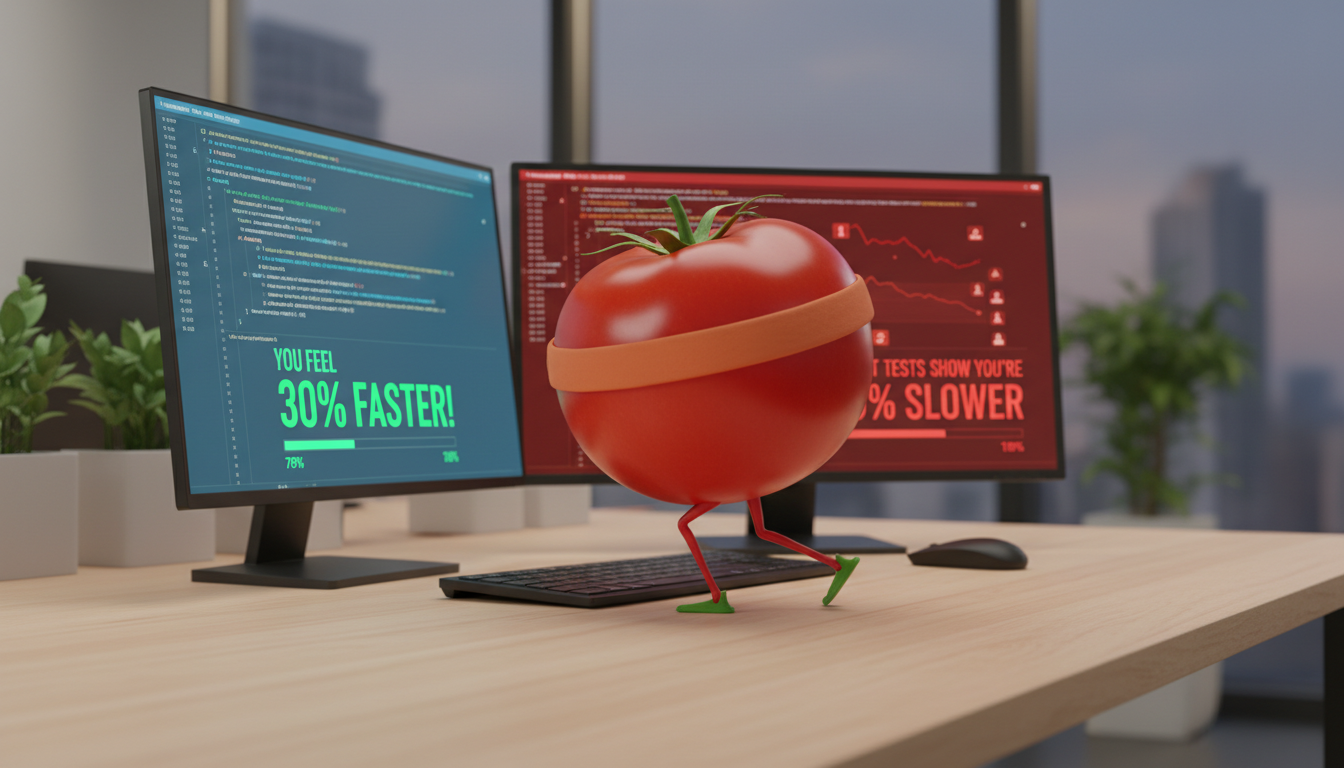
You're using AI to code. You feel faster. Way faster.
You're probably not.
A new controlled study from METR just dropped in 2026. They tested 16 experienced developers on real open-source issues. The results are wild.
Developers using AI took 19% longer to complete tasks.
But they estimated they were 20% faster.
That's a 39 percentage point gap between how fast you feel and how fast you actually are.
The Feeling Wins
I get it. AI autocomplete feels incredible. You type three characters and suddenly you have 50 lines of code.
Dopamine hit. Your brain registers "work completed fast."

But that's code generated, not work completed. You still need to read it. Understand it. Test it. Fix the parts that don't work.
The generation is instant. The verification takes forever.
Your brain doesn't account for that second part when it calculates "how productive was I today?"
Why Metrics Are Shifting
Gartner saw this coming. They're predicting a major shift in how companies measure developer productivity in 2026.
Out: velocity, deployment frequency, lines of code.
In: creativity and innovation.
Because AI can pump out code volume all day. That's not the bottleneck anymore.
The bottleneck is knowing what to build. Understanding why something broke. Designing systems that actually work.
Those things require deep thinking. You can't autocomplete your way through them.
The Real Speed Gains
Platform engineering is where the actual speed improvements are happening.
Companies used to need 2-3 weeks to get code to production. Tickets, approvals, manual provisioning.
After implementing Internal Developer Platforms, that drops to less than one day.
That's a 40% delivery speed increase. Not from AI writing code faster. From removing friction in the entire process.
AI helps you generate code 30% faster. But if verification and deployment eat that gain, your velocity stays flat.
Why Your Brain Lies to You
Your perception of productivity is based on activity, not results.
When you're typing less and AI is generating more, you feel efficient. You're "working smarter."
But the research shows you're spending that saved typing time reviewing, testing, and rewriting AI output.
The total time to working code goes up. But it doesn't feel that way.
This is the same trap as context switching. You feel busy all day. You accomplished nothing.
Movement Breaks Cut Through the Fog
Here's what helps me stay honest about actual productivity versus busy-work.
Regular movement breaks.
When you step away from the screen every 25 minutes, you get forced perspective. You can't lie to yourself about whether you actually shipped anything.
You come back and ask: did I make real progress? Or did I just review AI-generated code for an hour?
I built Movedoro because I kept falling into this trap. I'd feel productive all day, then realize at 6pm I hadn't actually finished a single feature.
Every 25 minutes, move for 2 minutes. Screen locks until you do.
It's not about fitness. It's about breaking the illusion of productivity long enough to see what's actually happening.
You can feel fast and be slow. The breaks help you notice the difference.