Focus efficiency hit a 3-year low (and your tools are why)
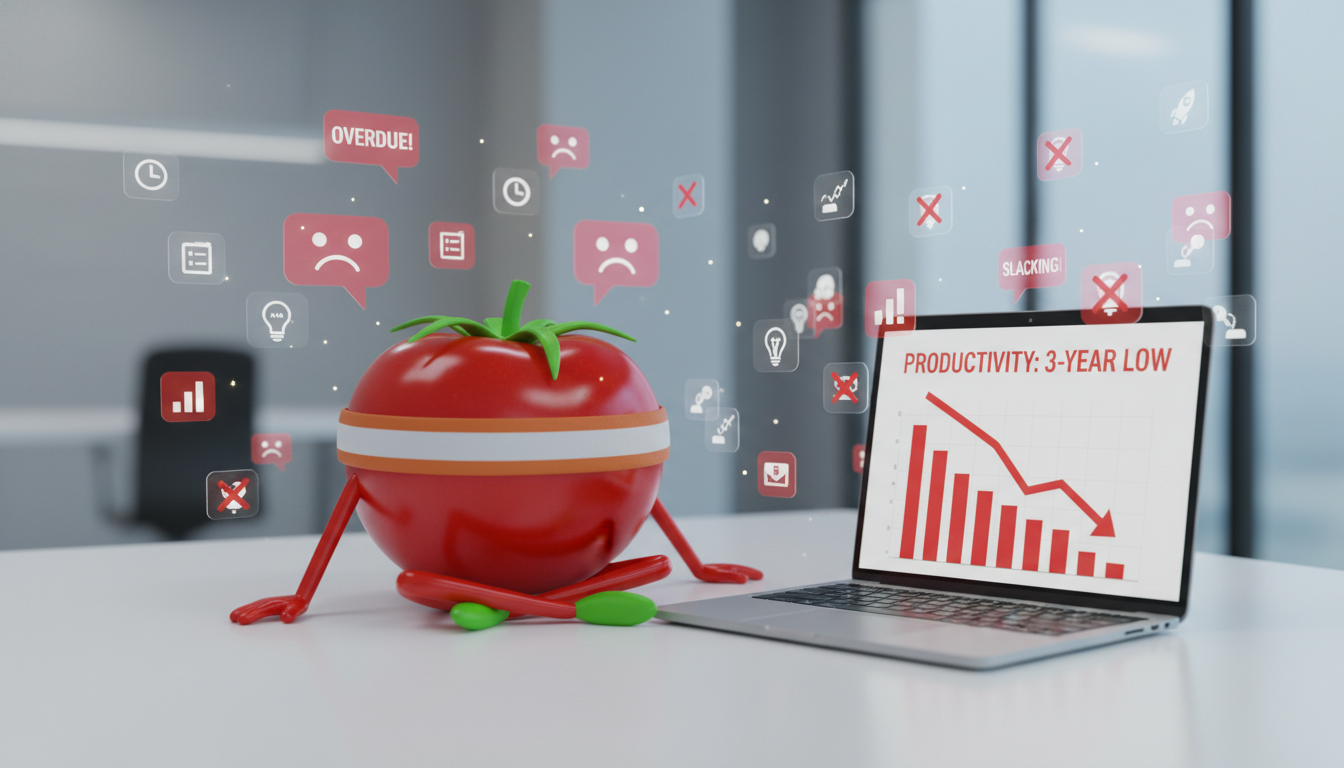
ActivTrak tracked 163,638 employees across 2025 and published the results this year. Focus efficiency dropped to 60% - the lowest it's been in three years.
Not despite productivity tools. Because of them.
More tools, less focus
The average knowledge worker now uses 9-10 different apps daily. Each one has notifications. Each one pulls context. Each switch between them takes your brain about 23 minutes to recover from.
The pattern is predictable. You install something to save time. It does save time on specific tasks. But it also adds another notification surface, another inbox to check, another thing competing for your attention during the windows when you're trying to think.
The ActivTrak data shows workers are spending less total time working - which should mean more focus per hour. But focus efficiency dropped anyway. The hours got shorter, but the fragmentation got worse.

The tool trap
Every productivity tool promises to reduce friction. Most of them do, for the specific task they're designed for. The problem is the meta-cost: each tool you adopt also means one more place your attention can be pulled.
Slack tells you you're responsive. GitHub sends you a review request. Your project manager pings about a ticket. Your AI assistant surfaces something you asked about yesterday. All of these feel like progress. None of them are what you were actually trying to build.
The real problem isn't that any single tool is bad. It's that the sum of them creates a constant low-grade pull that makes it impossible to maintain the kind of extended focus that actual hard problems require.
Protecting windows, not just time
The fix isn't uninstalling everything. It's building windows where nothing can interrupt.
Not "I'll try to focus." An actual boundary. A period of time where notifications are off, the inbox is closed, and one thing gets worked on until it's done or the time is up.
That sounds simple. In practice, most developers don't have a mechanism for it. Something always feels urgent enough to check. The default environment doesn't protect you - you have to enforce it deliberately or it collapses.
That's what I built Movedoro around. The Pomodoro timer isn't just a productivity technique - it's a commitment device. When the session starts, the expectation is set: this window is for one thing. When it ends, you move, reset, and start the next one clean.
Sixty percent focus efficiency means almost half your working time is attention noise. That's not a time management problem. It's a window protection problem.
That's pretty much it.