Digital Overload: Why Developers Are Switching Tools 50+ Times a Day
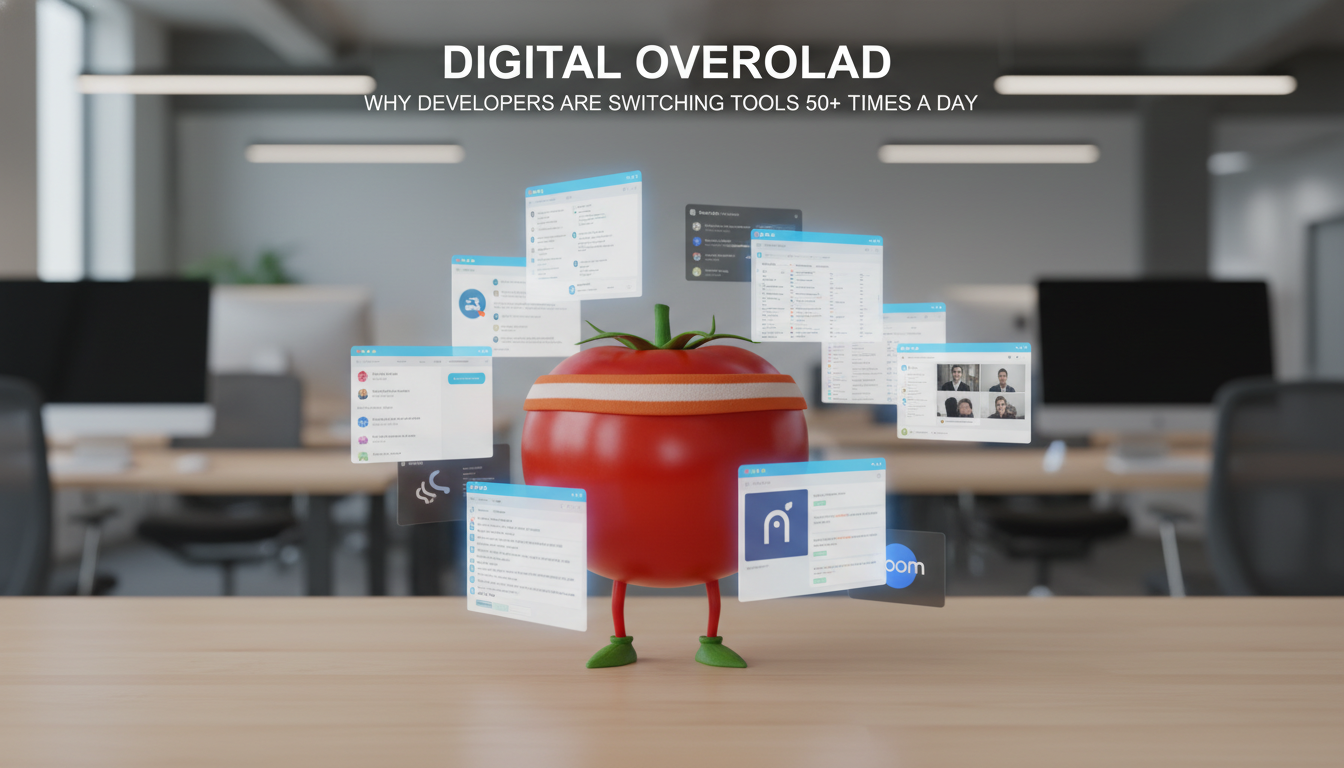
You're not just coding anymore.
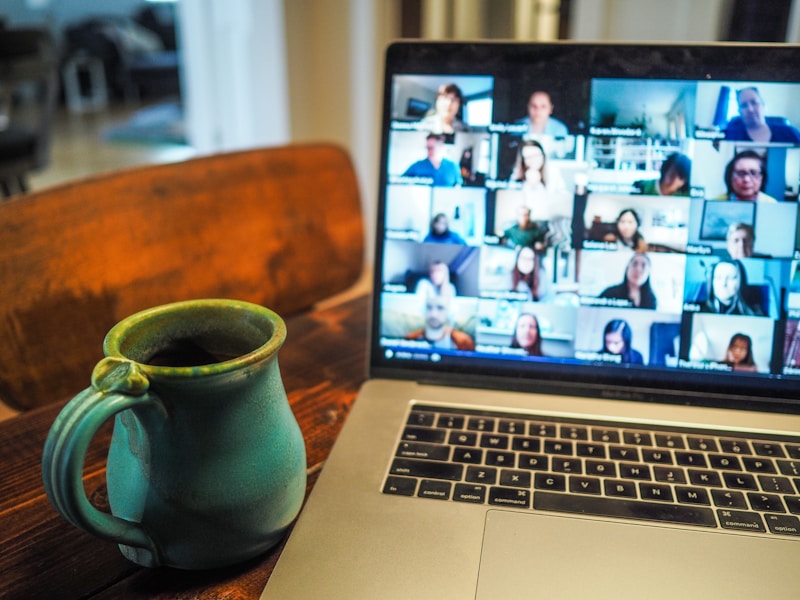
You're switching between Slack, Jira, GitHub, Notion, Zoom, your IDE, and twelve browser tabs. Every few minutes. All day long.
That's digital overload. And it's killing your brain.
The Numbers Are Bad
68% of tech workers report burnout symptoms. That's up from 49% just three years ago.
LeadDev's 2025 Engineering Leadership Report found that 22% of developers are at critical burnout levels. Another 24% are moderately burned out.
The problem isn't the work. It's the way we work.
Context Switching Fatigue
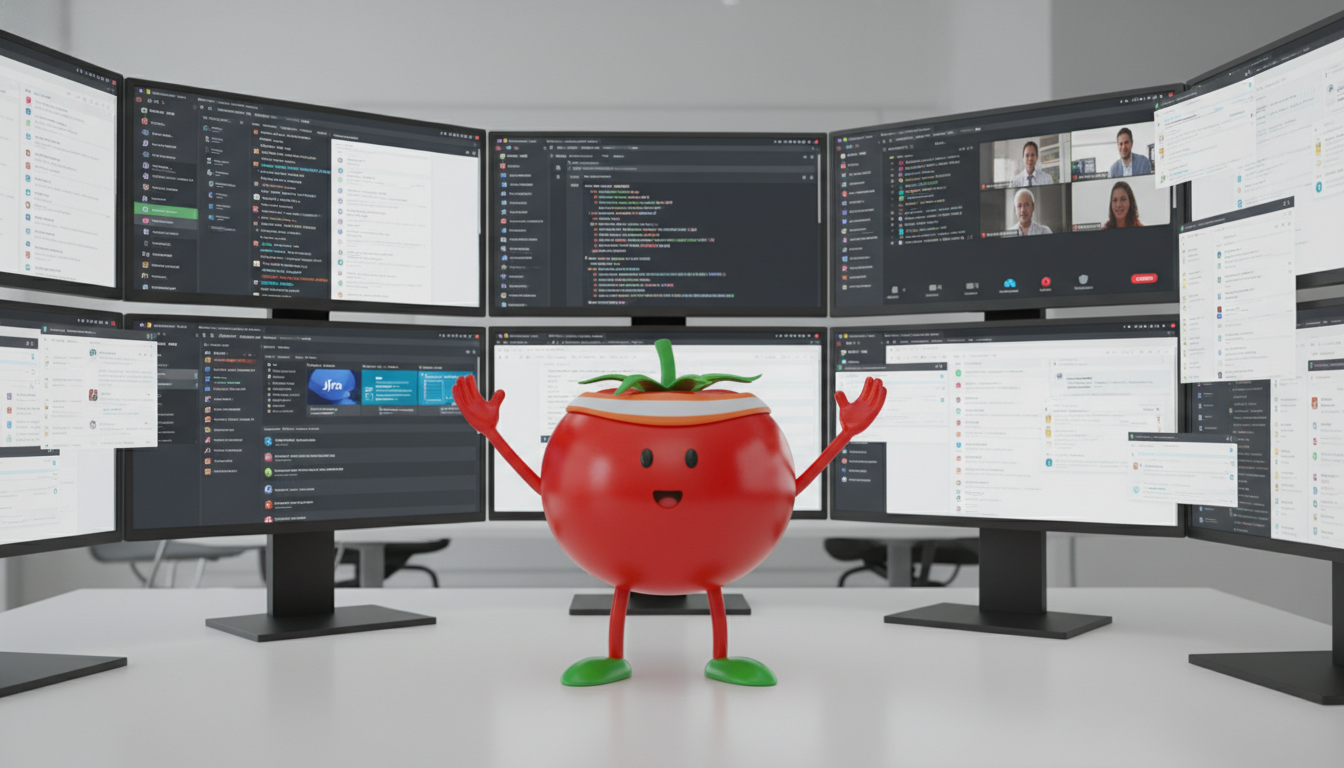
Every task demands switching between multiple tools. Code review? GitHub, then Slack to notify someone, then Jira to update the ticket, then back to your IDE.
That's four context switches for one task.
Your brain doesn't smoothly transition between apps. It resets. Every single time.
And when every task fragments your attention across five different tools, simple work becomes exhausting. Not because the work is hard. Because your brain is constantly rebooting.
The Blurred Boundary Problem
Remote work removed the physical boundary of leaving the office. You log back in after dinner. You check Slack before bed. You answer a GitHub notification on Sunday morning.
The tools follow you everywhere. And without clear boundaries, the workday stretches far beyond eight hours.
Not because you have more work. Because the tools never stop pinging you.
What Actually Works
You can't fix digital overload by adding another app. You need to interrupt the pattern physically.
Movement breaks force your brain to stop scanning notifications. You can't check Slack while doing squats. You can't scroll Jira during pushups.
When you move, your nervous system resets. You're not just switching apps. You're switching mental states.
Research shows that even brief physical activity breaks reduce stress and improve focus. Not another productivity hack. Physical movement.
The Movedoro Fix
I built Movedoro because I was drowning in tools. I'd open my laptop and immediately feel overwhelmed by everything demanding my attention.
Every 25 minutes, the app locks your screen. You move for two minutes. When you come back, you're not picking up where you left off in the chaos.
You're resetting before the digital overload takes over again.
Your burnout didn't happen overnight. It won't fix overnight. But movement breaks interrupt the pattern before it gets worse.
That's it.