Cognitive Overload Beats Workload as #1 Burnout Driver
You've probably heard that working too many hours causes burnout.
Turns out that's not the real problem anymore.
New research from 2026 shows cognitive strain has replaced workload as the primary driver of burnout. It's not how many hours you work. It's how fragmented those hours are.
The New Burnout Driver
McKinsey and the University of Oxford just published workplace wellness research. The finding: employees spend more than 60 percent of their working time navigating fragmented systems, unclear responsibilities, and high-friction workflows.
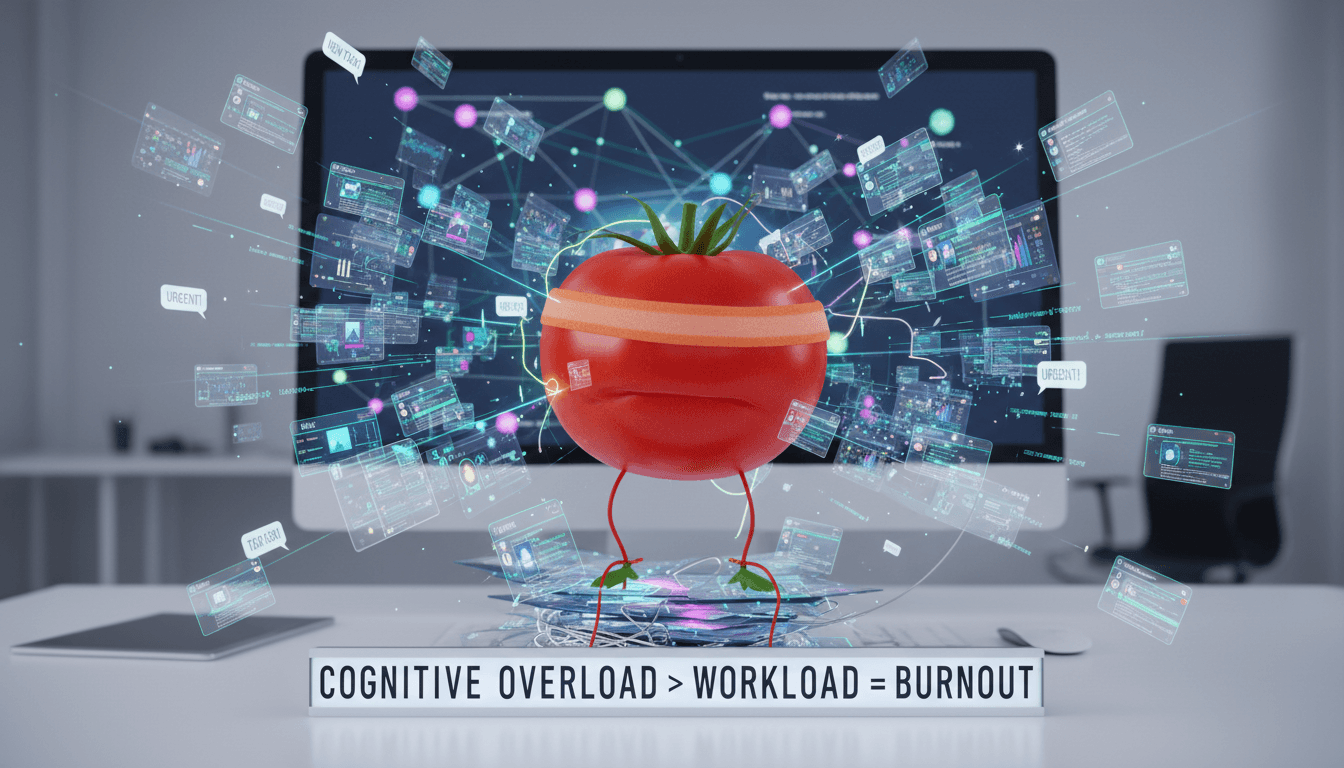
That's cognitive overload. Too many tabs open in your brain.
You're not burning out from doing too much work. You're burning out from constantly switching between Slack, Jira, GitHub, Notion, Zoom, and email while trying to hold context in your head.
The Engagement Collapse
Gallup's 2024 State of the Global Workplace report shows the damage. Global employee engagement dropped from 23% to 21%. That's the same size drop as during COVID-19 lockdowns.
Only 21 percent of workers worldwide are engaged. Down from 88 percent in 2025.
This collapse in engagement cost the global economy $438 billion in lost productivity in 2024.
Nearly 8 out of 10 people are just going through the motions at work. Not because they're lazy. Because their brains are fried from constant context switching.

Why Cognitive Load Breaks You
Your working memory has limited capacity. Every interruption, every tool switch, every notification forces your brain to reload context.
It's not just annoying. It's exhausting.
Cognitive overload drains mental energy. Makes it harder to stay focused and motivated. Tasks take longer. Deadlines slip. Quality drops.
The warning signs show up before traditional burnout. Someone who's usually quick starts to lag. Misses deadlines. Delivers lower-quality work.
That's not a performance problem. That's a cognitive capacity problem.
The Hidden Threat to Leaders
In 2026, cognitive overload in executives is becoming one of the most serious hidden threats to leadership performance.
Leadership demands have grown in both scope and intensity. Leaders process complex information, engage in constant multitasking, and adapt to rapidly evolving technology.
The "too many tabs open" problem at work. When inputs, interruptions, and constant context-switching overwhelm working memory, performance cracks before burnout and attrition hit.
What Actually Fixes This
The solution isn't working fewer hours. It's protecting your cognitive capacity.
You need to close the tabs. Not just in your browser. In your brain.
Movement breaks force a hard reset. When you step away from your desk and move your body, you're not just stretching your legs. You're clearing your mental cache.
Two minutes of movement interrupts the pattern of cognitive overload. Your brain gets a break from holding all that context. When you come back, you can make clearer decisions about what actually needs your attention.
The research is shifting from doing more to protecting focus and energy. Cognitive load theory shows that optimizing mental bandwidth isn't just beneficial. It's essential.
That's what Movedoro does. Every 25 minutes, your screen locks. You move for two minutes. When you unlock, your working memory has reset.
You come back with the capacity to decide what deserves space in your head and what can wait.
Cognitive strain beats workload as the burnout driver. Movement breaks beat cognitive strain.


