AI Can Do 93% Of Your Job (But You're Too Burned Out To Adapt)
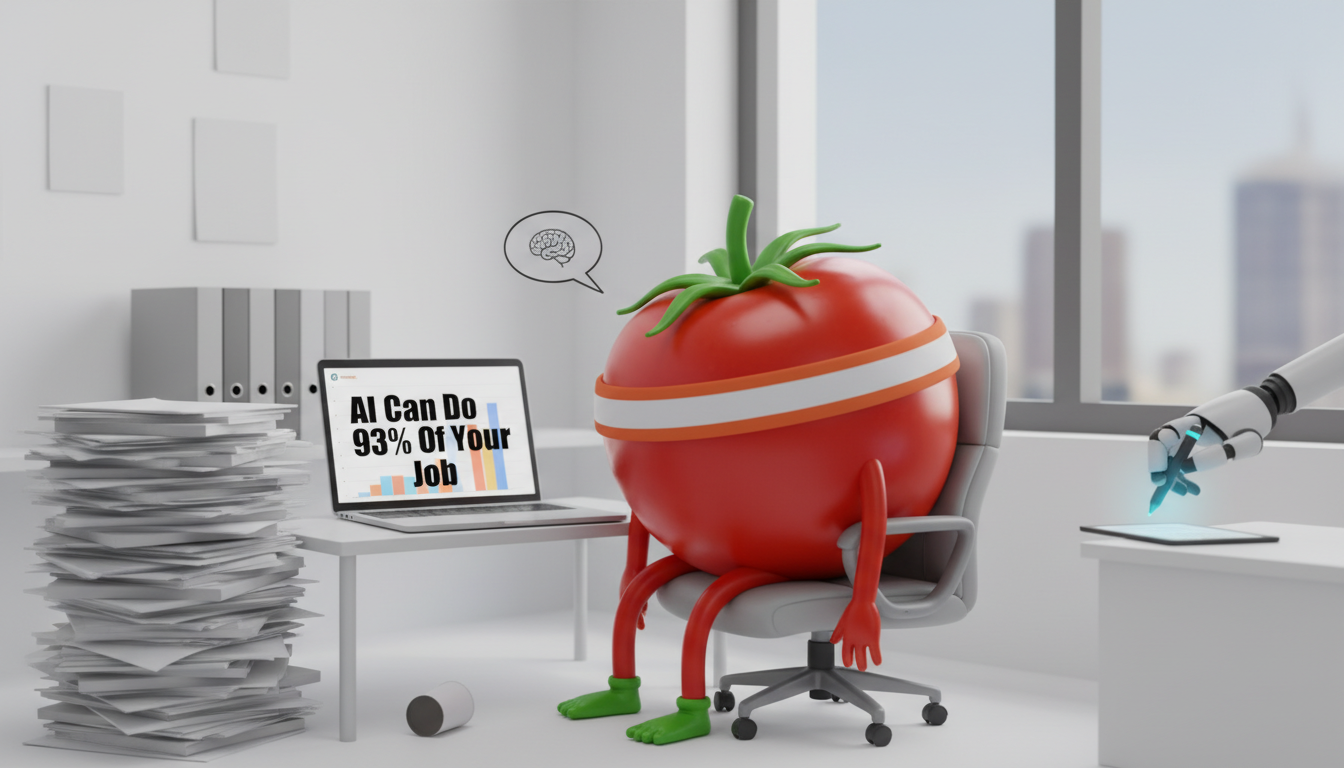
AI just got better at your job. Way better.
Cognizant's 2026 report shows AI can now handle $4.5 trillion worth of work in the US. The percentage of tasks it can't automate? Dropped from 57% in 2023 to 32% today.
That means AI can potentially impact 93% of jobs right now.
But here's the problem. You're supposed to adapt to this shift. Learn new skills. Pivot your career. Stay relevant.
And you're too burned out to do any of it.
The Burnout Crisis Nobody's Talking About
While AI gets more capable every month, the workforce is collapsing from stress.
77% of employees have experienced burnout at least once in the last year. That's from a 2024 Deloitte study.
Employee engagement dropped from 88% in 2025 to just 64% today. That's a 24-point drop in one year.
You're not learning to work alongside AI. You're barely surviving your current workload.

The Mental Fitness Gap
Here's what nobody says out loud. AI isn't just replacing tasks. It's creating new cognitive demands.
You need to learn how to prompt AI effectively. Review its outputs. Fix its mistakes. Integrate it into workflows. Constantly evaluate which tasks to automate and which to keep manual.
That requires mental bandwidth. And you don't have it.
When you're burned out, you can't learn. You can't adapt. You just survive.
The research is clear. Companies that integrate well-being into leadership and culture see up to 20% higher productivity. But most organizations treat mental health as a perk, not a foundation.
Why This Gets Worse
AI improves exponentially. Your capacity to adapt doesn't.
In 2023, 57% of job tasks couldn't be automated. Today it's 32%. Next year? It'll be lower.
Meanwhile, burnout is spreading. 68% of tech workers now report burnout symptoms. That's up from 49% three years ago.
The gap between what AI can do and what humans can handle is growing. Fast.
The Real Solution Isn't More AI Tools
You can't solve burnout by adding another productivity app. Or taking an AI training course. Or working harder to stay ahead of automation.
You need recovery. Not optimization.
Research shows that proactive mental fitness strategies work. Resilience training. Mindfulness breaks. Physical movement that resets your nervous system.
Not because it makes you more productive. Because it makes you functional enough to adapt in the first place.
Movement Resets Your Nervous System
Your brain can't process the AI revolution when it's stuck in fight-or-flight mode from chronic stress.
Movement breaks interrupt that pattern. Two minutes of squats or pushups forces your nervous system to shift out of stress response.
When you come back to your desk, you're not just less stressed. You're cognitively capable of learning again.
Studies show even brief physical activity improves executive function. That's the brain capacity you need to evaluate AI outputs, make strategic decisions, and learn new skills.
You can't adapt to AI if your brain is too fried to think clearly.
The Movedoro System
I built Movedoro because I was drowning in both AI tools and burnout. The irony wasn't lost on me.
Every 25 minutes, your screen locks. You move for two minutes. When you unlock, you're not just taking a break from work.
You're building the mental fitness foundation you need to actually adapt to what AI is doing to your job.
AI can do 93% of jobs now. But only if the remaining 7% of human workers are mentally healthy enough to manage it.
Movement breaks aren't a nice-to-have anymore. They're how you stay relevant when everything else is getting automated.
That's it.