A 20-minute nap beats caffeine after 3 p.m.
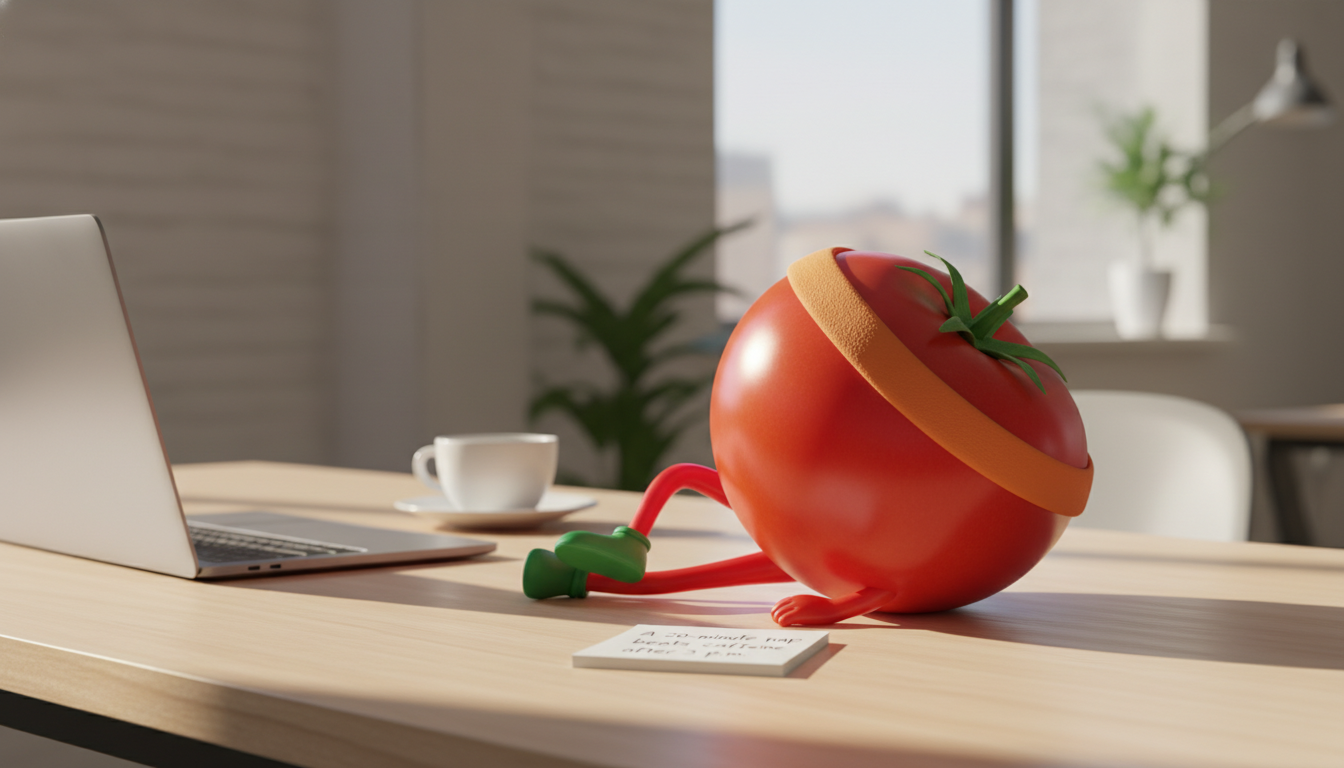
Around 2 p.m., something happens. You were fine an hour ago, but now you're re-reading the same line of code. Your coffee mug is empty and it's probably time for another.
That's not a caffeine deficiency. It's a biological process your body runs every single day.
Why 2 p.m. hits different
Your circadian rhythm creates a natural dip in alertness in the early-to-mid afternoon - separate from how much sleep you got the night before. This dip happens to everyone. Most people treat it as a productivity problem to push through.
NASA studied this. They found that a 26-minute nap improved pilot performance by 34% and alertness by 100%. Not coffee. A nap.
A systematic review and meta-analysis published in PMC found that short naps improved all types of cognitive performance tested - logical reasoning, reaction time, processing speed, and memory. The benefits lasted up to 3 hours after waking.

The problem with afternoon coffee
Caffeine has a half-life of about 5-6 hours. A coffee at 3 p.m. is still half-active in your system at 9 p.m. Research on sleep quality shows this delays sleep onset and reduces deep sleep - which means tomorrow's focus starts worse than today's.
You're borrowing energy from tomorrow to get through today. The debt compounds.
A 20-minute nap doesn't do this. You wake up, the rest of your afternoon is sharper, and your sleep that night is unaffected.
What makes it work
The 20-minute mark is important. Under that threshold, you stay in lighter sleep stages and avoid sleep inertia - the groggy, disoriented feeling that comes from waking mid-cycle. You wake up clearer, not worse.
Researchers also note the timing matters. Napping before 3 p.m. fits naturally with the circadian dip and doesn't push into territory that disrupts nighttime sleep.
The sweet spot: 20 minutes, between noon and 3 p.m. Set an alarm, lie down or recline, don't worry if you don't fully fall asleep - even light rest helps.
Using this practically
I started treating one of my afternoon Movedoro breaks differently. Instead of movement, I use a 20-minute timer, close my eyes, and actually rest. Not every day, but on the days where I can feel the afternoon wall coming.
It's awkward to explain to anyone who sees you. But the hour that follows is noticeably different from the hour that follows a third espresso.
That's pretty much it.