
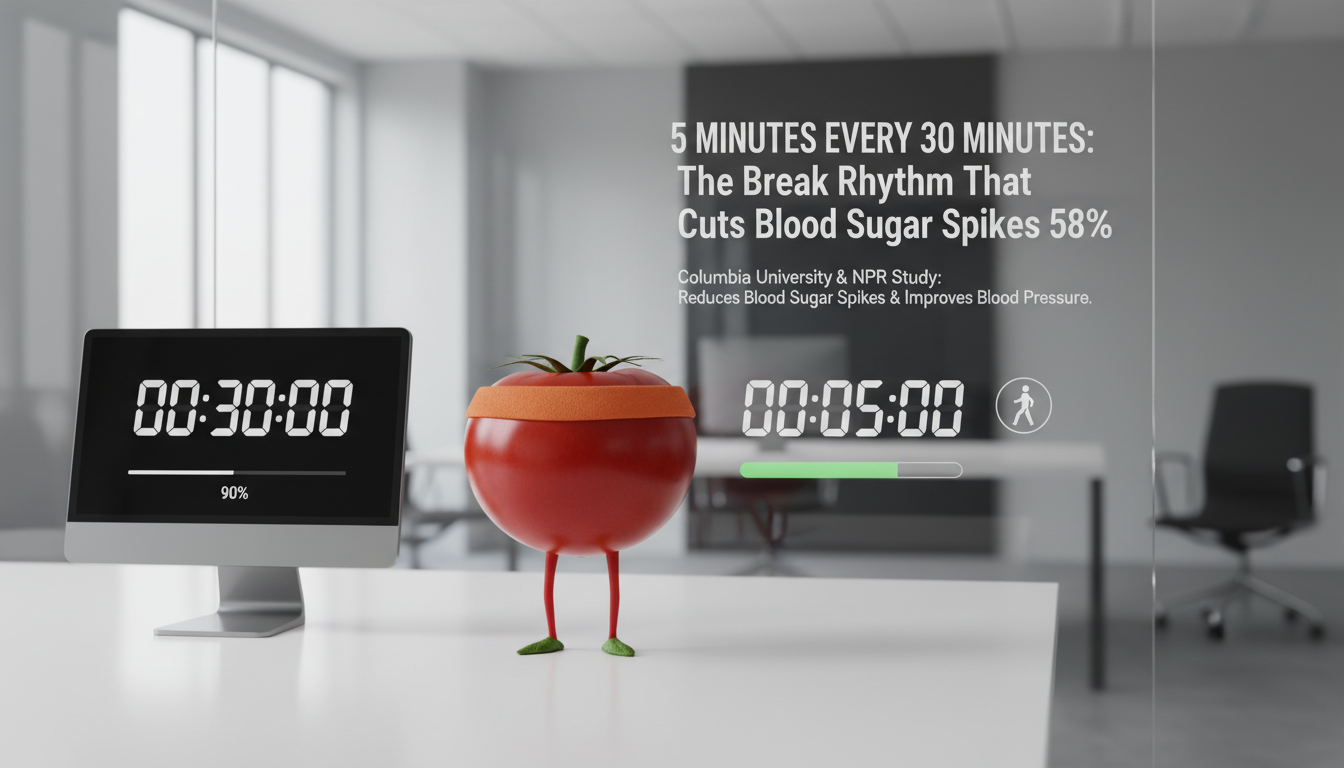
5 Minutes Every 30 Minutes: The Break Rhythm That Cuts Blood Sugar Spikes 58%
You know you should take breaks. You don't.
Or you take them wrong.
Columbia University Medical Center just published the definitive answer on break timing. They tested different intervals. Every hour. Every two hours. Every 30 minutes.
Only one pattern delivered major health benefits.
Five minutes of walking every 30 minutes.
That's it. That's the rhythm.
The Numbers Are Wild
Blood sugar spikes dropped 58% compared to sitting for eight hours straight.
Blood pressure fell 4-5 millimeters of mercury. That's the same reduction you'd get from exercising daily for six months.
NPR ran this as their Body Electric challenge. 20,000 people tested it. They reported higher productivity and lower fatigue.
This isn't theory. It's tested at scale.
Why Every 30 Minutes Matters
Your body starts reacting to prolonged sitting around the 20-30 minute mark.

Blood sugar regulation gets messy. Blood pressure creeps up. Your focus starts to drift.
The five-minute walk interrupts this before it compounds.
Every hour is too late. Every two hours is way too late. Your body's already dealing with the damage by then.
Every 30 minutes catches it early.
The Productivity Angle
Here's what surprised me about the NPR data.
People didn't just feel healthier. They reported being more productive.
You'd think breaking every 30 minutes would kill your flow. It does the opposite.
Your attention span maxes out around 40 seconds now anyway. You're already switching between code, Slack, email, and random browser tabs every few minutes.
The five-minute walk gives your brain permission to actually reset instead of fake-working through the fatigue.
Making It Happen
Five minutes every 30 minutes sounds aggressive if you're used to grinding for hours.
It's not.
You're already taking breaks. You're just doing them wrong. Scrolling Twitter. Checking email. Switching tabs.
Those aren't breaks. They're just different work.
Walking is an actual break. Your body moves. Your eyes leave the screen. Your brain gets a reset.
I built Movedoro because I couldn't stick to this rhythm on my own. I'd tell myself "just finish this one thing" and suddenly it's been two hours.
Every 25 minutes, move for 2 minutes. Your screen locks until you do.
The research says 30 minutes. Movedoro does 25. Close enough. The point is consistency.
If you're sitting for 90-minute "deep work" sessions, your blood sugar is spiking and your blood pressure is climbing. You feel productive. Your body disagrees.
Try five minutes every 30. Or two minutes every 25 with Movedoro.
The research is clear. The rhythm matters.